Can relationships and sex education be transformed?
November 19, 2026
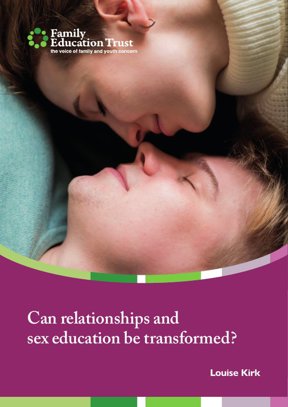
New report calls for a root-and-branch rethink of Relationships and Sex Education
A new report from Family Education Trust argues that Relationships, Health and Sex Education (RHSE) in schools must be fundamentally reformed to give young people a more honest, health-conscious and future-focused understanding of sex, relationships and family life.
Can relationships and sex education be transformed? by Louise Kirk challenges the long-standing assumption that teenage sexual activity is inevitable and that contraception is an adequate solution to its consequences. It argues that this approach has left pupils under-informed about contraceptive failure, potential side-effects, sexually transmitted infections (STIs), fertility and the long-term importance of marriage and stable family life.
The report says RSE should equip young people for the adult lives many hope to build: lasting relationships, meaningful work and, for many, marriage and children. It calls for schools to replace a narrow risk management model with teaching that develops character, self-respect, delayed gratification and an understanding of the physical, emotional and spiritual dimensions of sexuality.
It highlights evidence that contraceptives are not fail-safe in typical use, particularly for younger users, and argues that pupils should receive clear information about possible health effects alongside discussion of effectiveness. The report also points to growing dissatisfaction among adult women with hormonal contraception and calls for better education about fertility awareness and body literacy before artificial methods are introduced.
The report’s central recommendations include:
- Put parents first: Give parents advance access to all RSE materials and meaningful involvement in policy and delivery.
- Teach the full facts: Explain contraceptive limitations, possible side-effects, STI risks and the reality that abstinence outside marriage and faithfulness within it offer the greatest protection.
- Promote sexual integrity: Teach fertility, puberty, emotional development and the value of self-control as connected aspects of whole-person health.
- Raise aspirations for marriage and family life: Present marriage as a positive, future-facing commitment that supports children, emotional wellbeing and social stability.
- Invest in better resources: Train teachers, governors and parents, and use transparent, scientifically grounded materials.
Louise Kirk, the report’s author, said: “Young people deserve more than the message that sex is inevitable and contraception will solve the consequences. They need truthful knowledge about their bodies, relationships and fertility, alongside the confidence to make choices that protect their health and help them build the stable, fulfilling futures they want.”
The report argues that the latest RSE guidance offers opportunities for greater parental transparency and age-appropriate teaching, but says a deeper change of direction is needed if schools are to support young people’s long-term wellbeing. It further adds that, with determination and making use of contradictory elements within the guidance, the change of direction can begin now.
Download the full report: Can relationships and sex education be transformed? by Louise Kirk (PDF)
ENDS
Notes to editors
1. The report, Can relationships and sex education be transformed?, by Louise Kirk, is published by Family Education Trust.
2. Louise Kirk is UK Co-ordinator of the Alive to the World values education programme and author of Sexuality Explained: A Guide for Parents and Children.
3. Family Education Trust is at 5th Floor, 167–169 Great Portland Street, London W1W 5PF, tel 0300 102 1737.
4. Media enquiries: Lucy Marsh, lucy.marsh@familyeducationtrust.org.uk.