FET statement on EHRC updated guidance on single sex spaces
May 22, 2026
Toilets and changing rooms should be based on biological sex
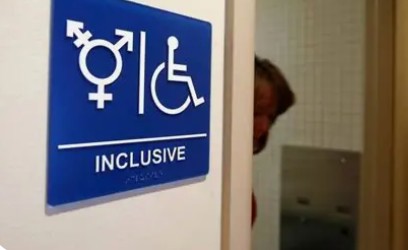 The Equality and Human Rights Commission (EHRC) has published its long-awaited updated code of practice which states that single sex spaces may lawfully be based on biological sex rather than gender identity.
The Minister for Women and Equalities Bridget Phillipson has finally laid the draft code before Parliament, more than a year after the landmark Supreme Court ruling in April 2025, which determined the words "woman" and "sex" in the Equality Act 2010 refer to a biological woman and biological sex.
The draft code, published on Thursday 21st May, explains how organisations should apply the Equality Act 2010 when providing services, exercising public functions, or running associations. The document applies across England, Scotland and Wales and has been laid before Parliament for review.
The draft code covers the characteristics under the Equality Act, including sex, disability, race, religion, sexual orientation and gender reassignment. It is intended to guide businesses, public bodies, charities, clubs and associations on complying with anti-discrimination law.
The most significant changes relate to the treatment of single-sex services and spaces following the Supreme Court’s 2025 ruling in the case of For Women Scotland Ltd v The Scottish Ministers. The code states that, for the purposes of the Equality Act, “sex” refers to biological sex, regardless of whether a person has a Gender Recognition Certificate (GRC).
Under the draft guidance, organisations providing single-sex services such as toilets, changing rooms, hospital wards, refuges or sports facilities are advised that they may lawfully restrict access based on biological sex, where doing so is a “proportionate means of achieving a legitimate aim.”
The code says providers must assess each situation individually and consider issues such as privacy, dignity, safety and fairness. But it also states that if service providers don’t offer alternative facilities for trans identifying individuals, such as unisex toilets, this is may amount to discrimination on the basis of gender reassignment.
Staff should not challenge trans individuals over public toilets
The new guidance more explicitly states that single‑sex spaces are based on biological sex and that this should be the starting point for decision‑making, adding that providers may, in limited circumstances, ask someone to confirm their sex if concerns are raised about access to a single-sex space. But warns that this must be done “sensitively” and that it would not be “practical or appropriate” for staff to challenge individuals they suspected were using the wrong public toilet or changing room.
This means that women and children could still be at risk from males entering female spaces if staff members don’t feel confident enough prevent access to anyone attempting to use opposite sex facilities.
Clarification on Gender Recognition Certificates (GRCs)
Some good news is that the guidance makes clear that holding a GRC does not automatically entitle someone to access opposite‑sex spaces. This gives organisations clearer legal confidence to apply single‑sex exceptions even when individuals have a certificate saying that they have changed sex.
The new guidance also confirms that blanket or policy‑based restrictions can be lawful where proportionate, rather than having to justify excluding biological males on a case by case basis. This is particularly useful for sensitive settings where privacy, dignity and safety are crucial — such as maternity wards and women’s refuges — and encourages organisations to adopt clear, structured policies and staff training, rather than relying solely on ad hoc decisions.
Nevertheless, the updated guidance advises organisations to evaluate alternative provisions, such as unisex or individual facilities, in situations where exclusions of trans-identified individuals are enforced.
We are concerned that this will cause organisations to move towards changing male and female toilets into ‘mixed sex’ cubicles, since having to create a third space for trans identifying individuals will be impractical and expensive. The requirement for alternative provision also risks causing access issues for disabled people if organisations direct trans identifying individuals to use disabled facilities instead.
We already know that unisex toilets cause safeguarding issues in schools. In 2023 police investigated allegations of girls being sexually assaulted in mixed sex toilets in an Essex school, and there have also been reports of girls getting UTIs because they don’t want to share toilets with boys.
The Good Law Project says it will continue to campaign for ‘trans inclusion’ because ‘Forcing trans people to use third spaces creates stigma, and risks outing them…third services or spaces are often insufficient – denying trans people access to vital services and pushing them out of public life. This will cause serious harm.”
We agree that the introduction of third spaces may have significant implications, as it integrates false concepts related to gender into government terminology through recognition of a third sex. The reality is that no-one can change sex and that male and female spaces must be strictly upheld.
While we cautiously welcome the draft code as a step in the right direction towards a return to common sense, we believe that families, children and society are still at risk until this false ideology is erased from government.
An example of how deeply embedded gender ideology is within government can be found on the news and politics website Guido Fawkes, which has published an email allegedly sent to all MPs and Commons staff, which offers emotional support to anyone affected by this "challenging and sensitive issue". The news article says that the email sent to MPs does not provide information about “further support” and external services, but links to “trans support groups” such as Trans Unite, which lists the controversial charity Mermaids as an “organisation we love.”
Please do take this opportunity to contact your workplace, local school, hospital, leisure centre or sports club to ask what changes they will make to ensure the safety of women and children. You can also write to your MP to ask them to uphold the law on single sex spaces within their constituency.